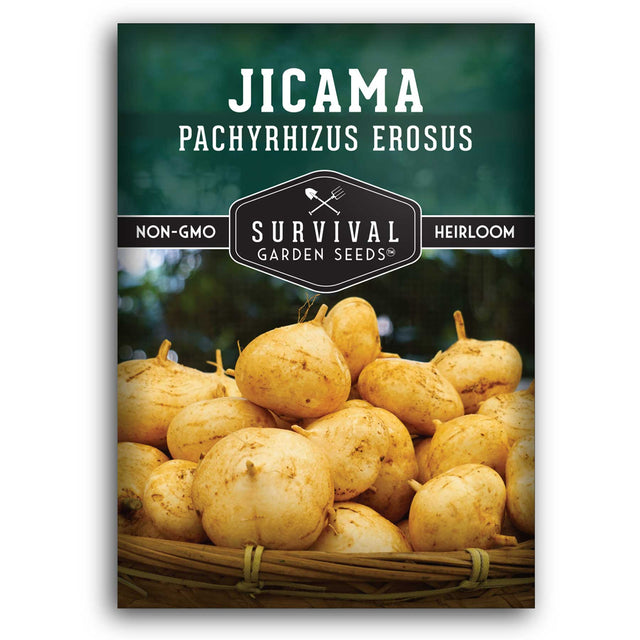
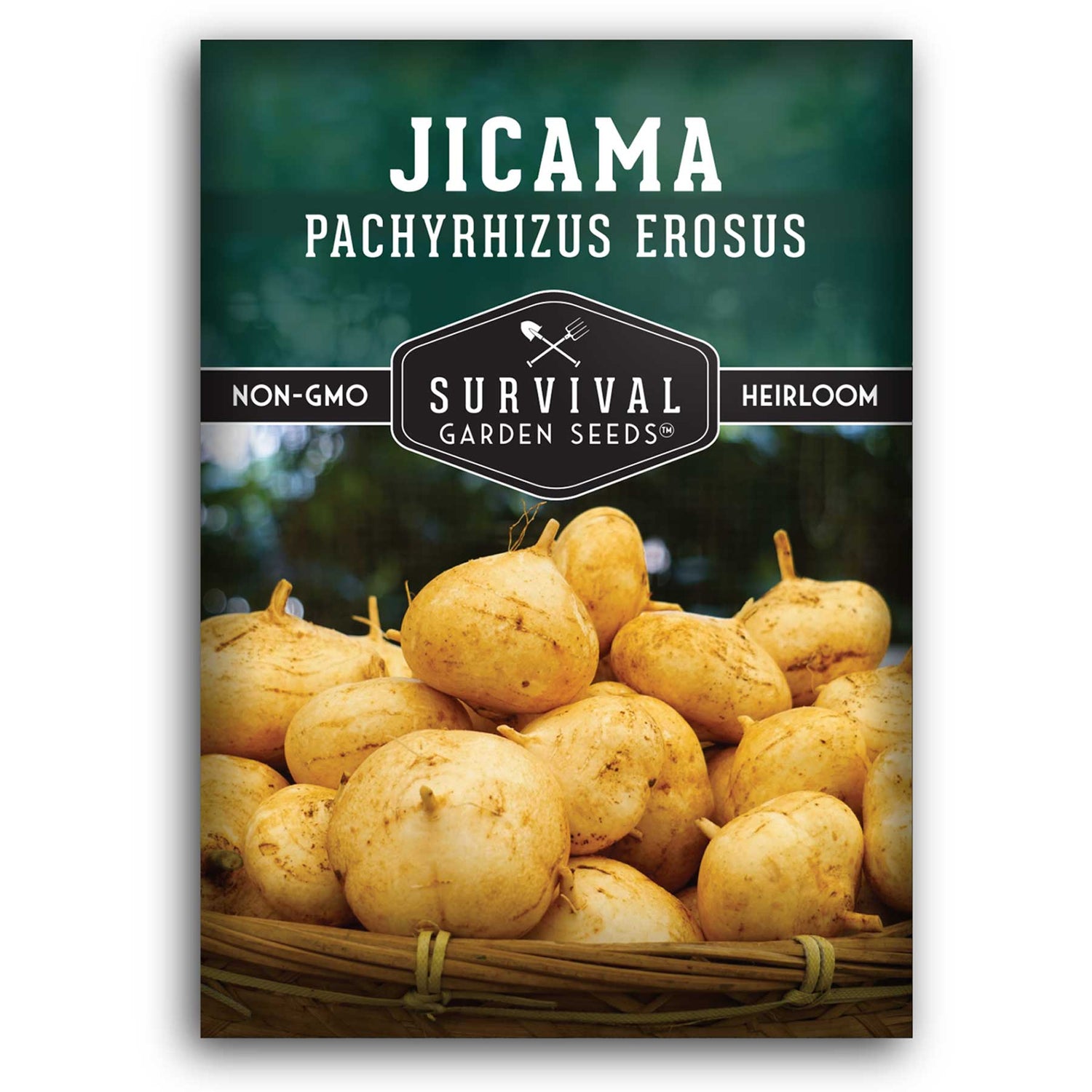


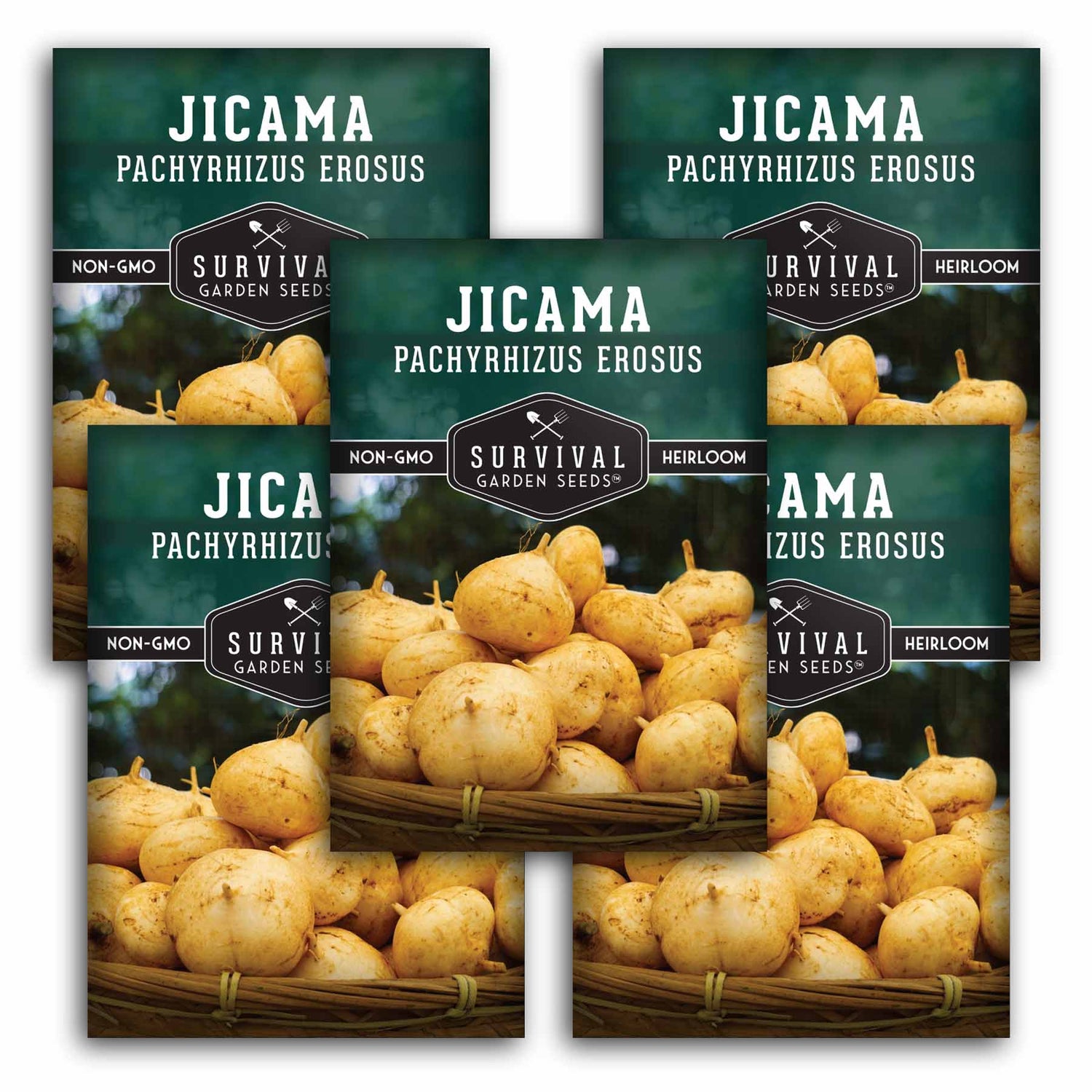
Jicama Seeds for Planting – Pachyrhizus erosus Heirloom Warm-Season Tubers for Crunchy, Sweet Root Harvests
Heirloom - Non-GMO - Reliable Germination
Jicama Seeds for Planting – Pachyrhizus erosus Heirloom Warm-Season Tubers for Crunchy, Sweet Root Harvests - 1 Packet is backordered and will ship as soon as it is back in stock.

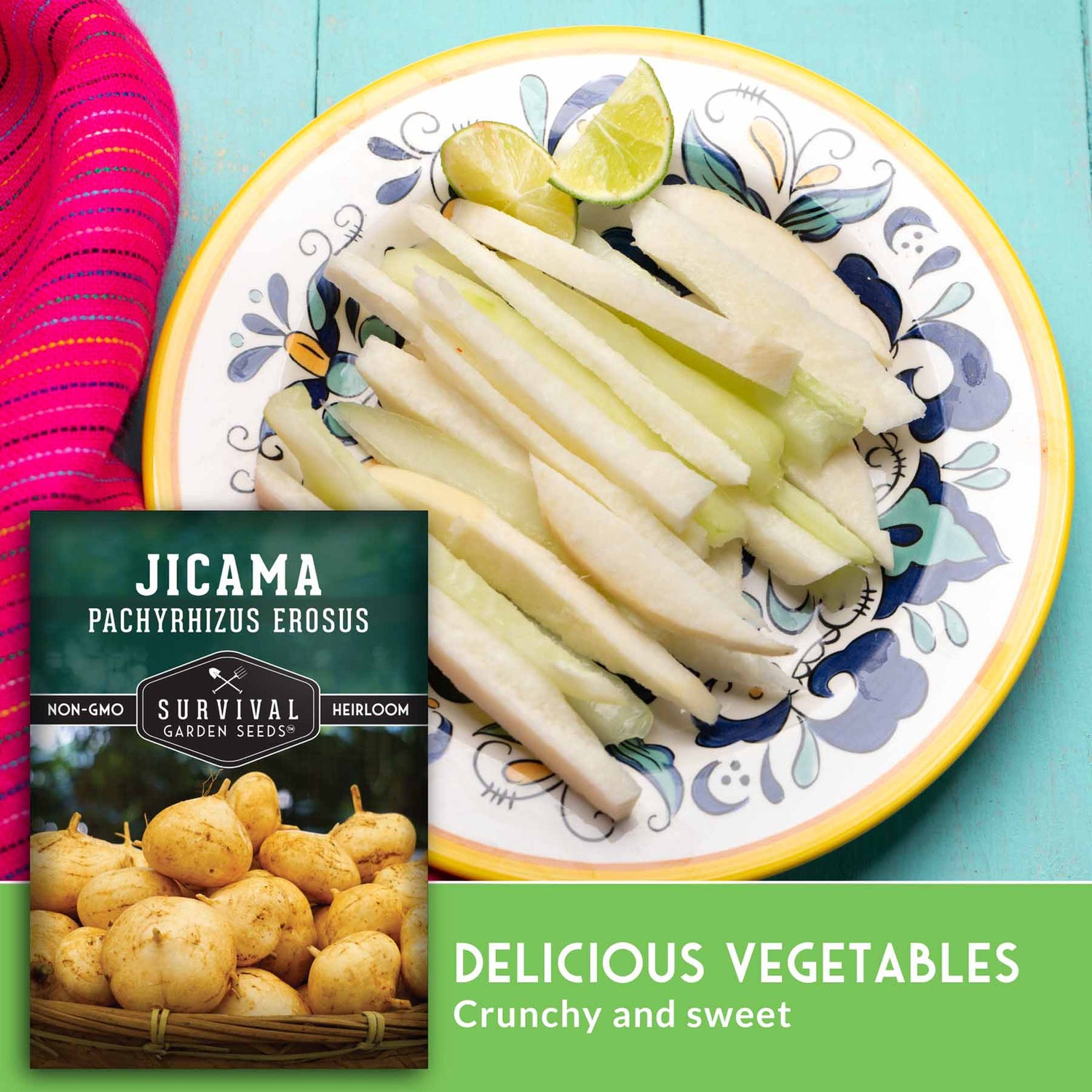
Grow authentic Jicama (Pachyrhizus erosus) at home with heirloom seeds from Survival Garden Seeds. Also called Mexican turnip or yam bean, jicama is a warm-season root vegetable known for its crisp, juicy texture and lightly sweet, nutty flavor. A staple in Latin cuisine, it shines in salads, salsas, fruit cups, tacos, and stir-fries—adding refreshing crunch to a wide range of dishes.
Heat-Loving, Productive, and Ideal for Warm Climates
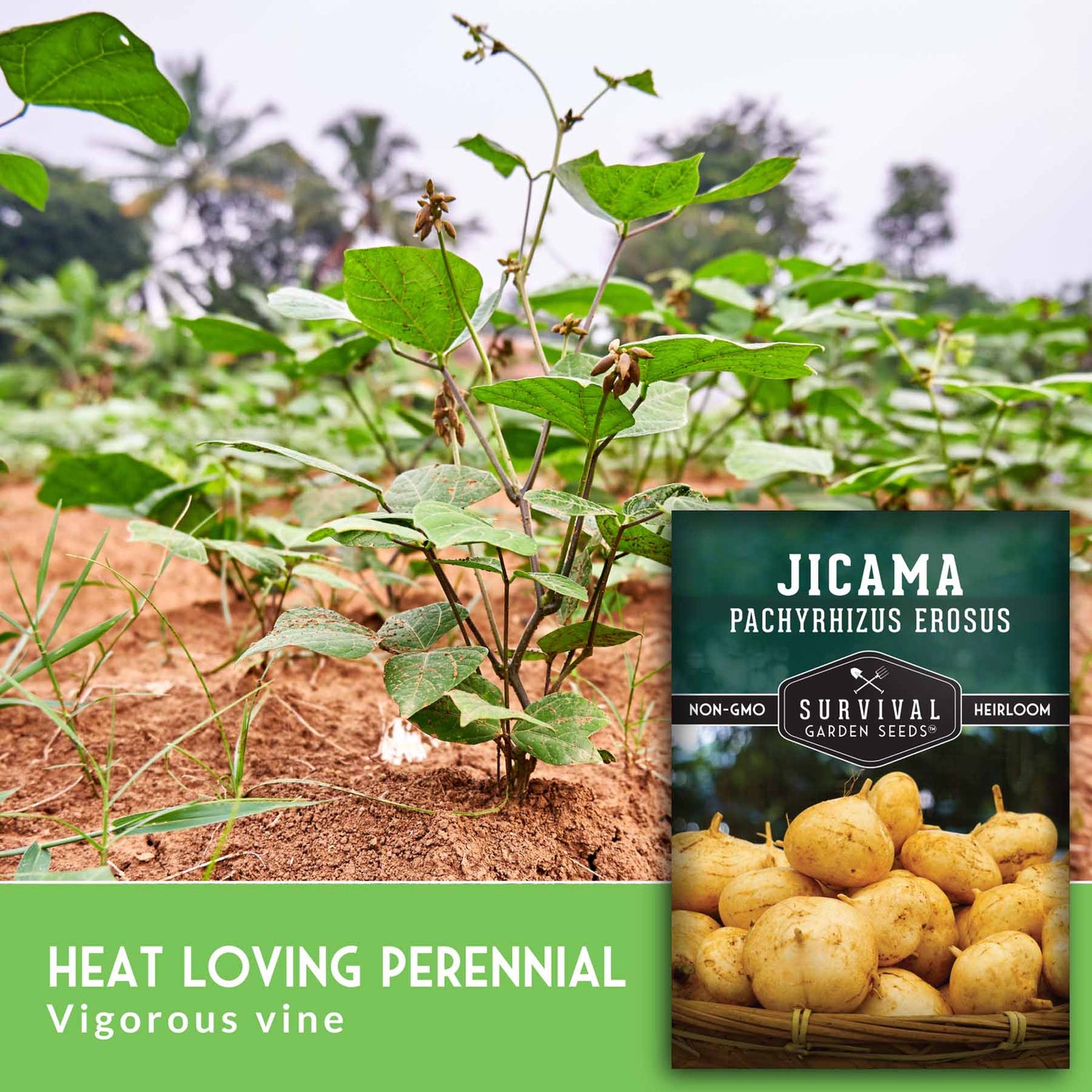
Jicama is a vigorous nitrogen-fixing vine that thrives in full sun and fertile, well-drained soil. This tropical crop requires sustained warmth to germinate and grow well, making it especially rewarding for gardeners who can provide consistent heat. With strong trellising, vines can stretch 15–20 feet and produce multiple large tubers that store beautifully for weeks after harvest.
Key characteristics include:
- Warm-season vines that thrive in hot, sunny conditions
- Crisp, refreshing roots with mild sweetness
- Nitrogen-fixing plants that enrich garden soil
- Drought-tolerant growth once established
- Potential for large yields in long, warm growing seasons
- Versatile culinary use, raw or cooked
Why Customers Love Jicama Seeds
- Produces large, crunchy tubers with excellent storage life
- Adds authentic Latin flavor and texture to homegrown meals
- Offers high yields when grown in a long, warm season
- Suitable for gardeners practicing sustainable, soil-building methods
- Heirloom, non-GMO seeds packed and tested in the USA
- Brings an uncommon but rewarding crop to backyard gardens
How to Grow
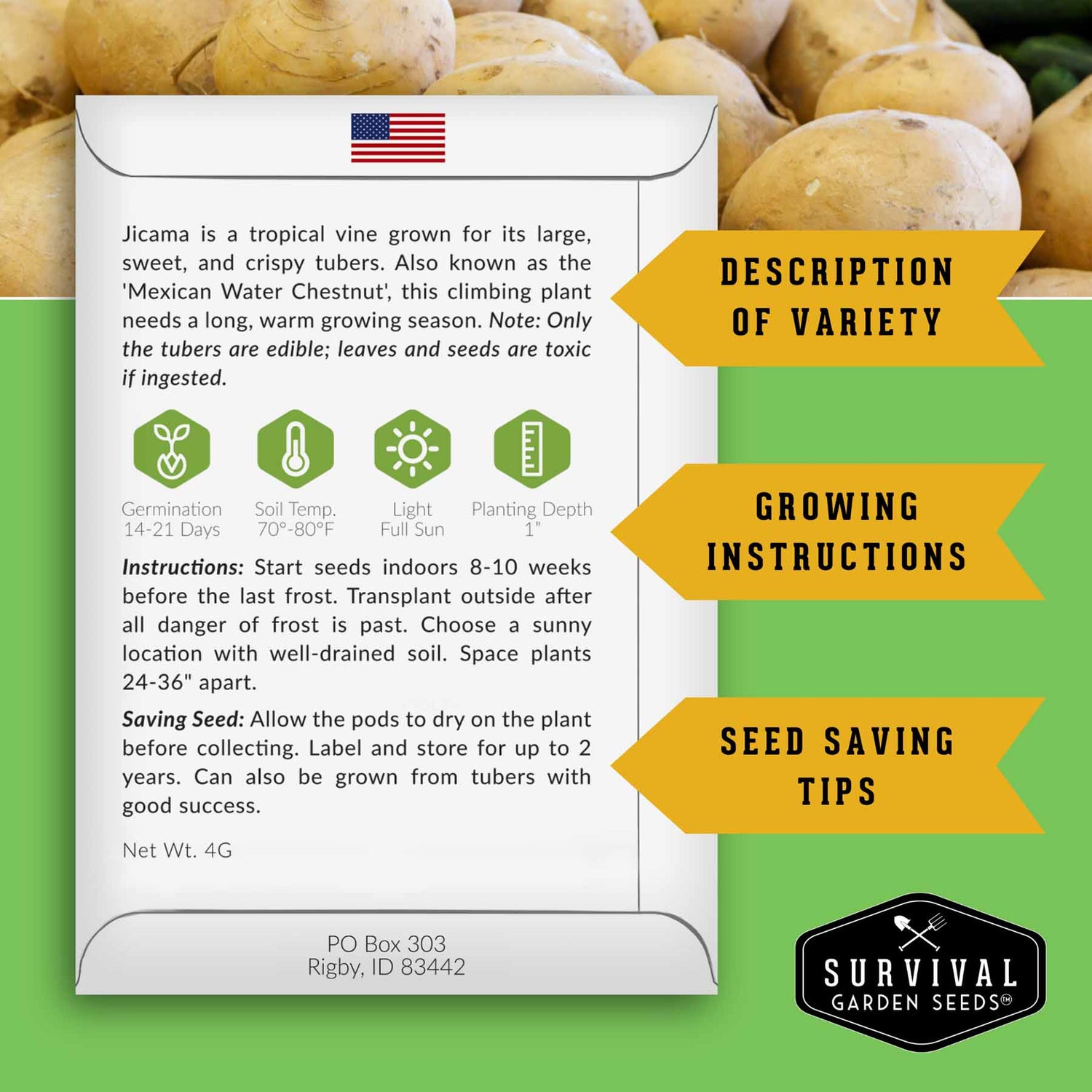
- Jicama requires warmth from the very start.
- Soak seeds overnight to encourage faster sprouting.
- Start indoors 6–8 weeks before transplanting. Maintain soil warmth of 80–90°F using a heat mat if needed.
- Transplant outdoors only after both air and soil are thoroughly warm.
- Provide a sturdy trellis or fence for the vines, which can reach 15–20 feet.
- Water regularly during establishment; mature plants show good drought tolerance.
- Harvest tubers when vines begin to naturally yellow at the end of the season.
Harvest & Use
Trim vines back when they begin to decline, then lift the tubers carefully. Store harvested jicama in a cool, dry place; roots keep well for extended periods. Enjoy them fresh in salads and fruit cups, or roast, sauté, or stir-fry for a slightly sweeter cooked flavor.
NET WT. 4 G
Jicama Seeds for Planting – Pachyrhizus erosus Heirloom Warm-Season...
Heirloom Vegetable Seeds
All of our seeds are open-pollinated, non-GMO, heirloom varieties with tested germination rates
Specifications
Specifications
-
Botanical Name
-
Planting Zones
-
Light
-
Soil Temp for Germination
-
Germination Time
-
Planting Depth
-
Plant Size
-
Days to Harvest
-
Growing Instructions
-
Seed Saving Instructions
-
Seed Count (approximate)
Payment & Security
Your payment information is processed securely. We do not store credit card details nor have access to your credit card information.
Why Choose Survival Garden Seeds
At Survival Garden Seeds, we believe in preparing today for tomorrow’s peace of mind. That’s why we offer only heirloom, non-GMO, and untreated seeds you can trust to nourish your family and support a sustainable lifestyle. As a family-owned American company, we’re committed to providing seeds that grow strong and true—helping you cultivate health, resilience, and beauty in your garden.

Print Your Own Gift Tags & Envelopes
Spruce up your seed gift with free downloadable print-your-own gift tags & envelopes.
Frequently Asked Questions
What are heirloom seeds?
What are heirloom seeds?
Heirloom seeds are the types of seeds your grandparents grew. These varieties have been passed down from generation to generation. They’re old reliable open-pollinated varieties that aren’t typically grown commercially. Instead, they have a rich history that predates modern breeding techniques.
You can learn more about open-pollinated, heirloom, and non-GMO seeds in our Survival Garden Training blog.
How do I know my seeds are fresh?
How do I know my seeds are fresh?
Every seed packet includes a "packed for" date, and we germination test each seed lot before packaging to ensure you receive viable, high-quality seeds that are ready to grow.
Are your seeds treated?
Are your seeds treated?
No, we do not pre-treat our farmer seeds. All of our garden seeds for sale are untreated, open-pollinated, non-GMO, and heirloom varieties. They are kept in temperature-controlled cooler storage until they are packed and shipped to keep them pest and disease-free.
In what zones can I grow your seeds?
In what zones can I grow your seeds?
The seeds in our collections are specifically chosen from varieties that can be successfully grown from Zone 3 to Zone 10 USDA Hardiness Zones. However, individual varieties have specific needs to thrive in different environments. Each seed pack has optimal temperatures for germination and instructions on seed starting. Consult local frost dates to plan your garden and get the most out of your seeds.
What is the shelf life of these gardening seeds?
What is the shelf life of these gardening seeds?
Most seeds remain viable for 3 to 5 years or longer when stored properly. Check your seed packet for specific varieties. For best results, keep your seeds in a cool, dry place away from direct sunlight and moisture. Store them in an airtight container in a consistent temperature environment—a refrigerator or cool basement works well. Proper storage helps maintain germination rates and extends seed life well beyond the packed date.
Where are Survival Garden Seeds sourced?
Where are Survival Garden Seeds sourced?
The majority of our seeds are sourced in the United States, with a few exceptions when the seed is difficult to source domestically. Whenever we do have to source outside of the US, we ensure our seeds are safe to grow, non-GMO varieties that meet our standards for germination and reliability.